Best for
SOLID UPHOLSTERY FABRIC for real projects
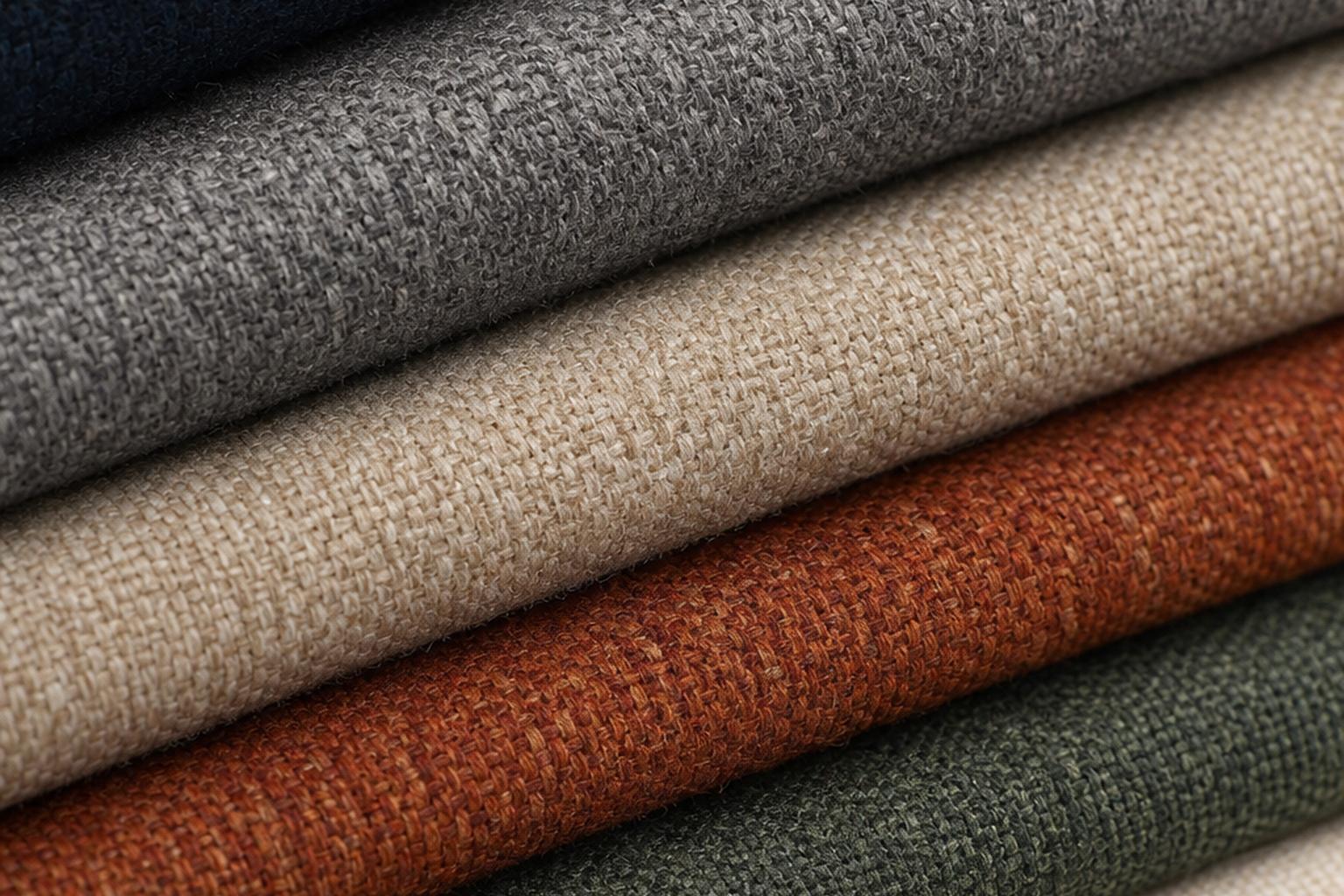
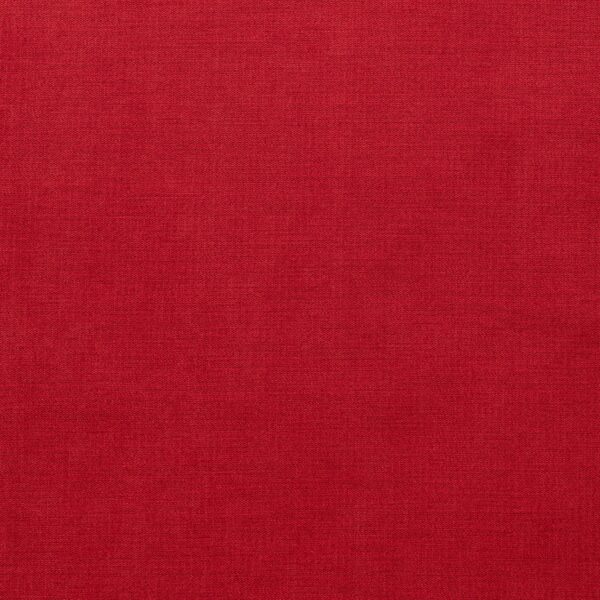
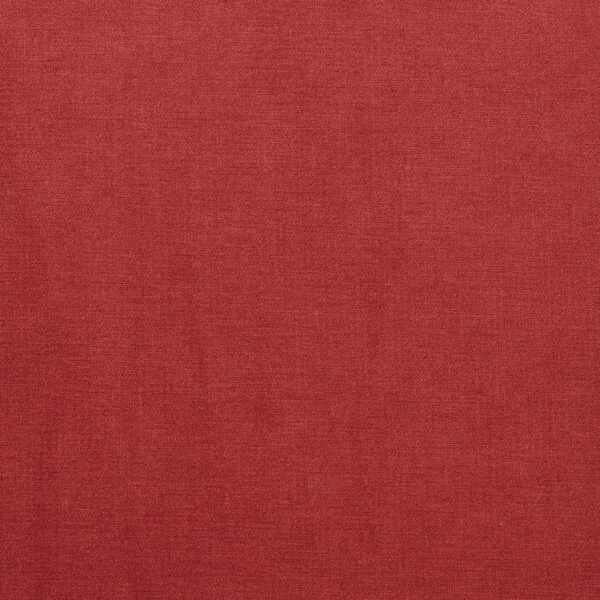
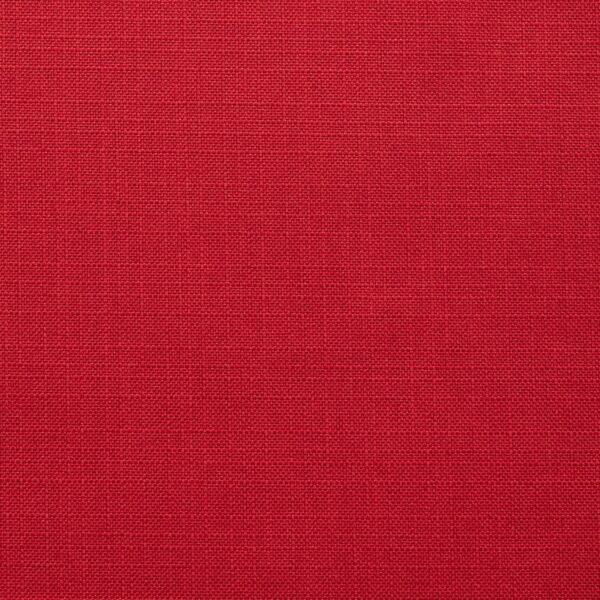
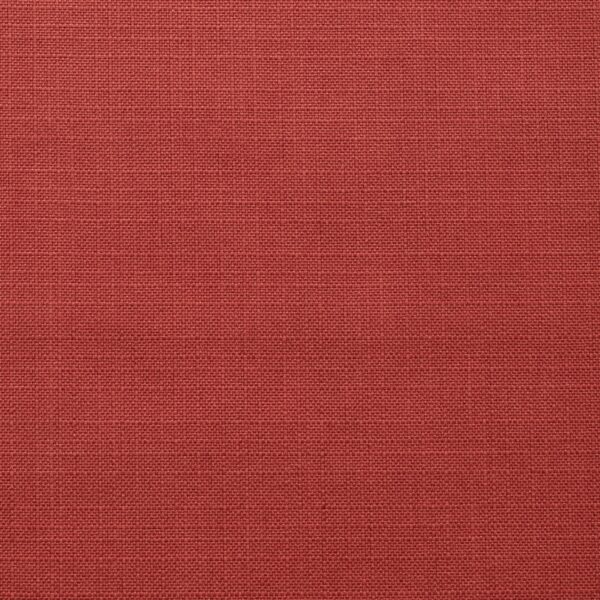
Solid upholstery fabric is not automatically plain: chenille, velvet, linen-look, woven texture, tweed, and performance solids each hide wear and catch light differently.
Why sample first?
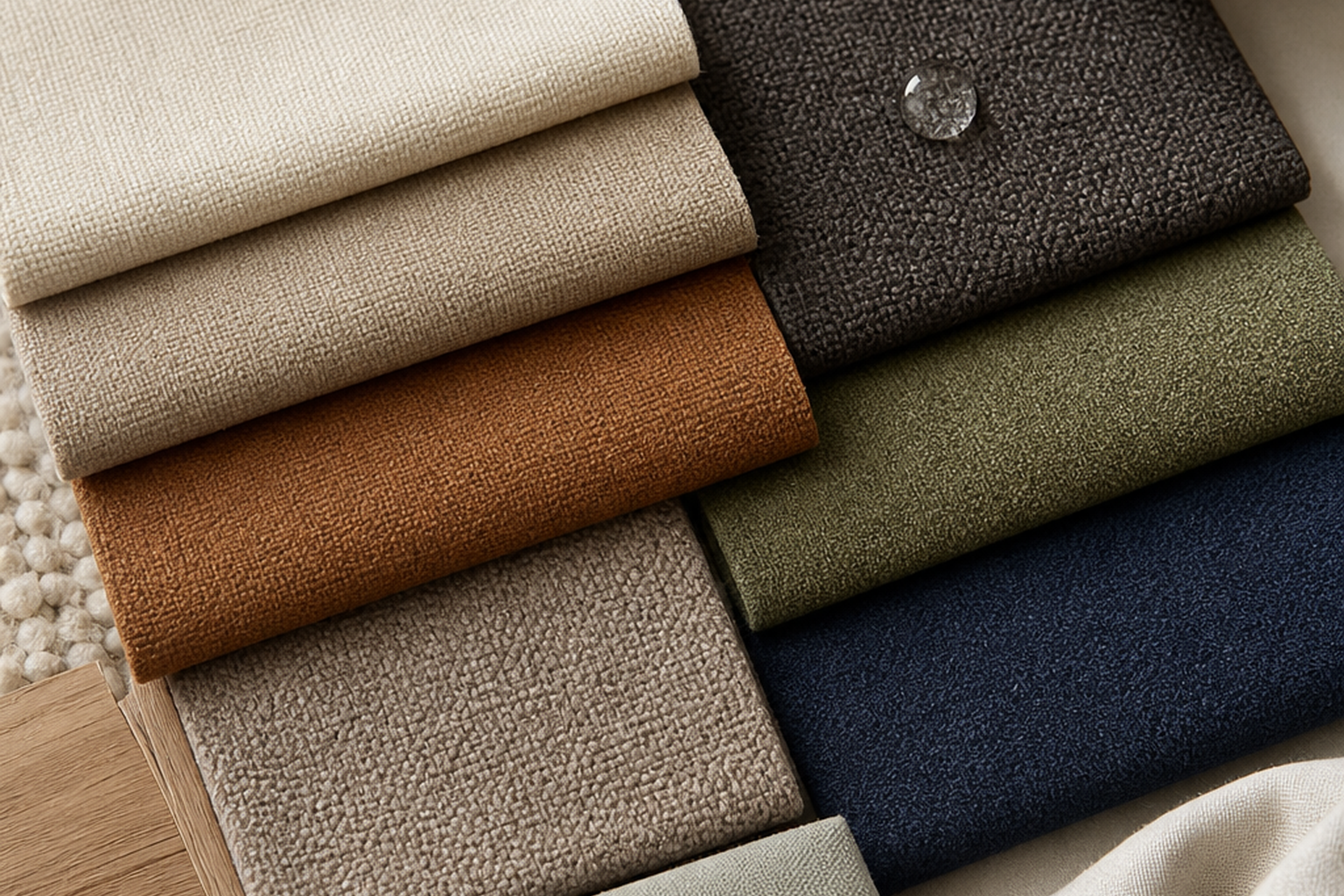
Use solid samples to compare hand, texture, sheen, lint visibility, and color in the room before ordering yardage.


Quick decision paths
Choose solids by texture and daily use first, then refine the exact color.

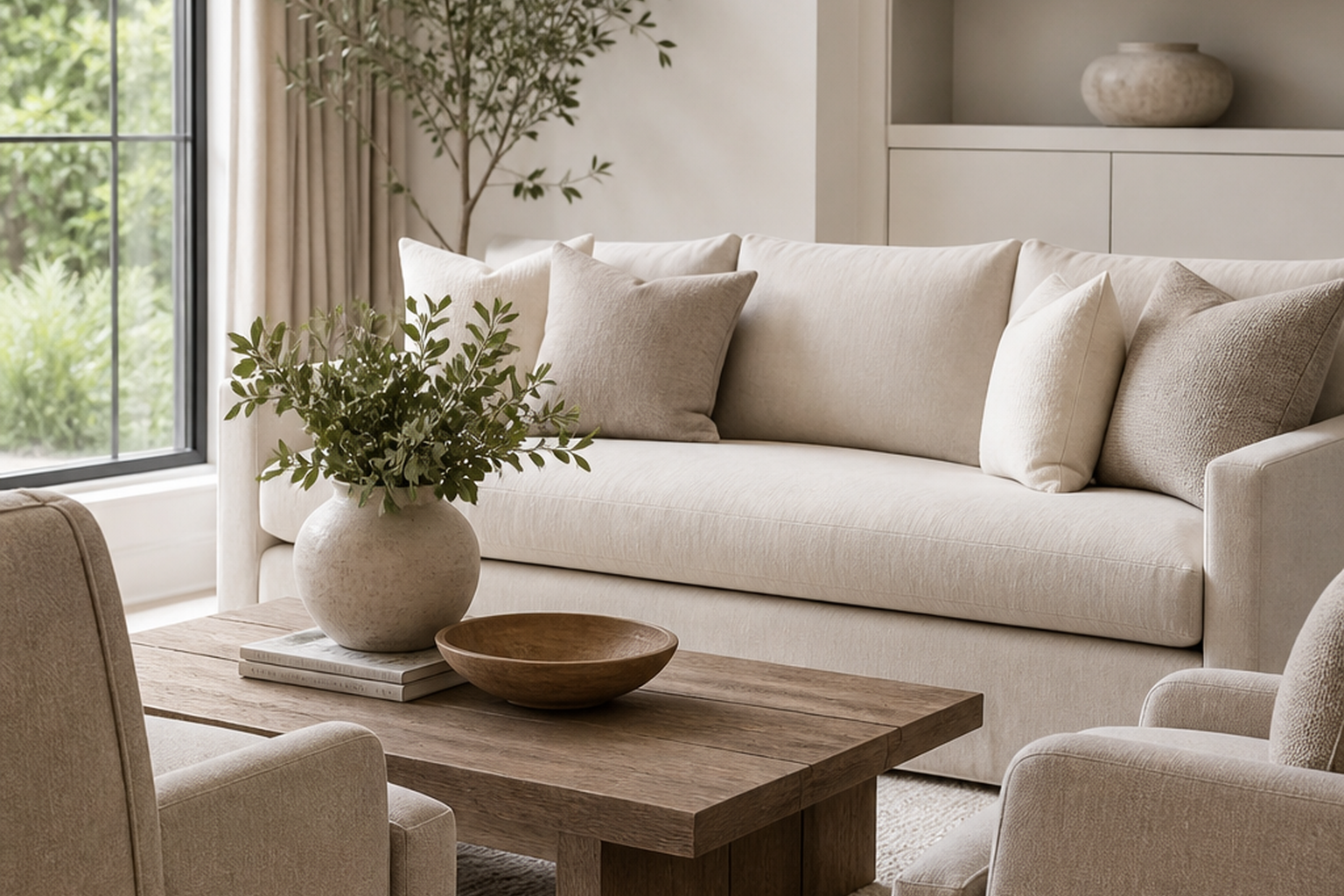
Finished room view
Plan your project
Use samples and the filtered catalog together: first confirm texture over plain color in the room, then compare exact SKUs for hand, backing, cleaning notes, width, repeat, stock, and yardage.
Check color, hand, texture, and pattern scale in the room.
Use the calculator for a planning range.
Review repeat, seams, cushion style, and reserve fabric before ordering.
Yardage calculator
Solid upholstery has no pattern to distract the eye, so plan yardage once texture, hand, and shade depth are strong enough for the furniture scale.
Answer-first collection guide
Solid upholstery fabric should be chosen by texture, cleanability, color depth, and furniture use. A flat solid shows stains, lint, and wear more readily than textured solids, heathered weaves, chenille, velvet, or small tonal patterns.
Best for
Sample checks
Avoid
Yardage
Filtered product catalog
Know the direction? Browse solid upholstery fabric products.
Use the guidance above to narrow the room, furniture, and sample checks, then open the full solid upholstery fabric catalog to compare exact SKUs, prices, stock, colors, and sample options.
Curated solid upholstery fabrics
Use this curated solid upholstery fabric rail to build a focused sample shortlist before ordering yardage.
Curated solid upholstery fabrics
Use this curated solid upholstery fabric rail to build a focused sample shortlist before ordering yardage.
Curated solid upholstery fabrics
Use this curated solid upholstery fabric rail to build a focused sample shortlist before ordering yardage.
Mini guide
Textured Solids Comparison
A shopper-facing checklist for solid upholstery fabric: test texture over plain color, compare the sample beside existing finishes, photograph it in daylight and evening light, then confirm hand, backing, cleaning notes, repeat, width, and yardage before ordering.
Comparison guide
Use this comparison to keep solid upholstery fabric decisions specific instead of treating every fabric in the catalog as interchangeable.
Flat solid
Textured solid
Performance solid
Frequently asked questions
Usually yes, but the texture matters. A textured solid can be easier to live with than a flat solid because it hides wear and adds depth.
Mid-tone textured solids, heathered weaves, chenille, and small tonal patterns usually hide everyday marks better than very light, very dark, or flat smooth solids.
Choose solid when the room already has pattern in rugs, pillows, or drapery. Choose a subtle texture rather than a perfectly flat solid for daily seating.
Yes. Velvet, chenille, linen-look, tweed, and woven textures can make solid upholstery look finished and tailored without adding visible pattern.
A solid chenille, velvet, tweed, linen-look, boucle-like texture, or heathered weave can add depth without visible pattern.
Often yes. Solids keep small rooms calmer, but texture still matters so the furniture does not look flat or show every mark.

Ready to shop?
Order samples first, compare them in the actual room, then use the catalog and yardage calculator when you are ready to choose final solid upholstery fabric yardage.