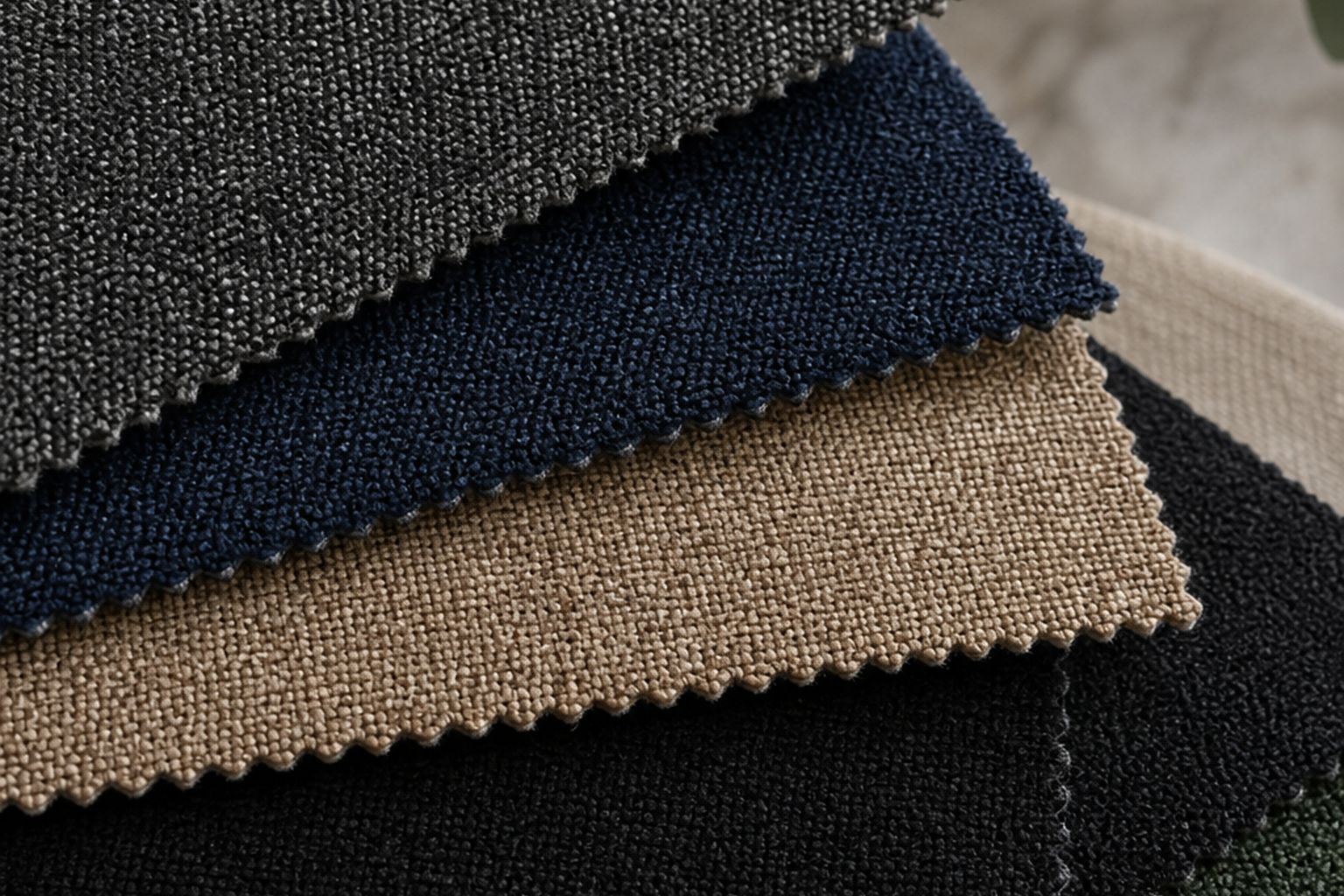
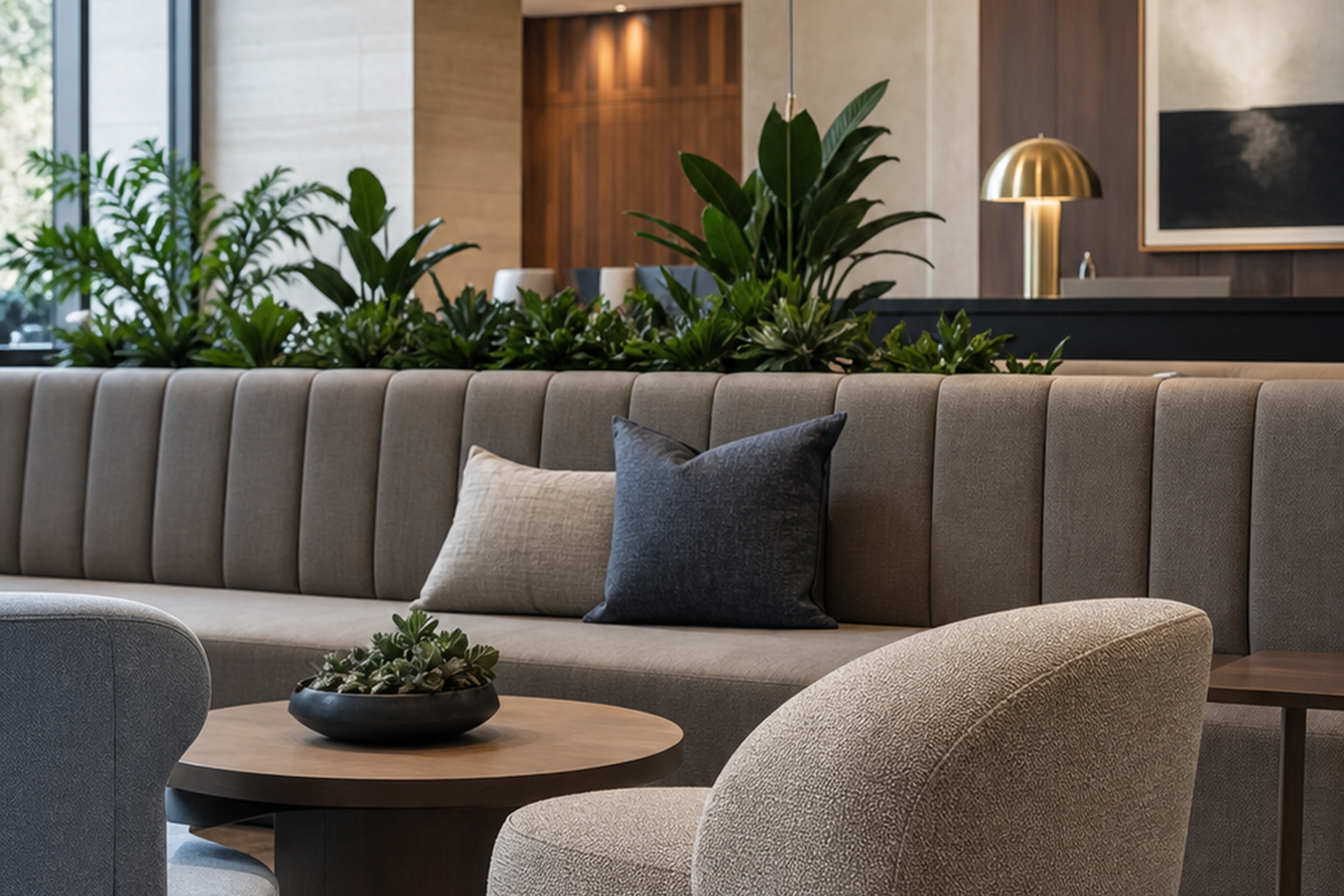
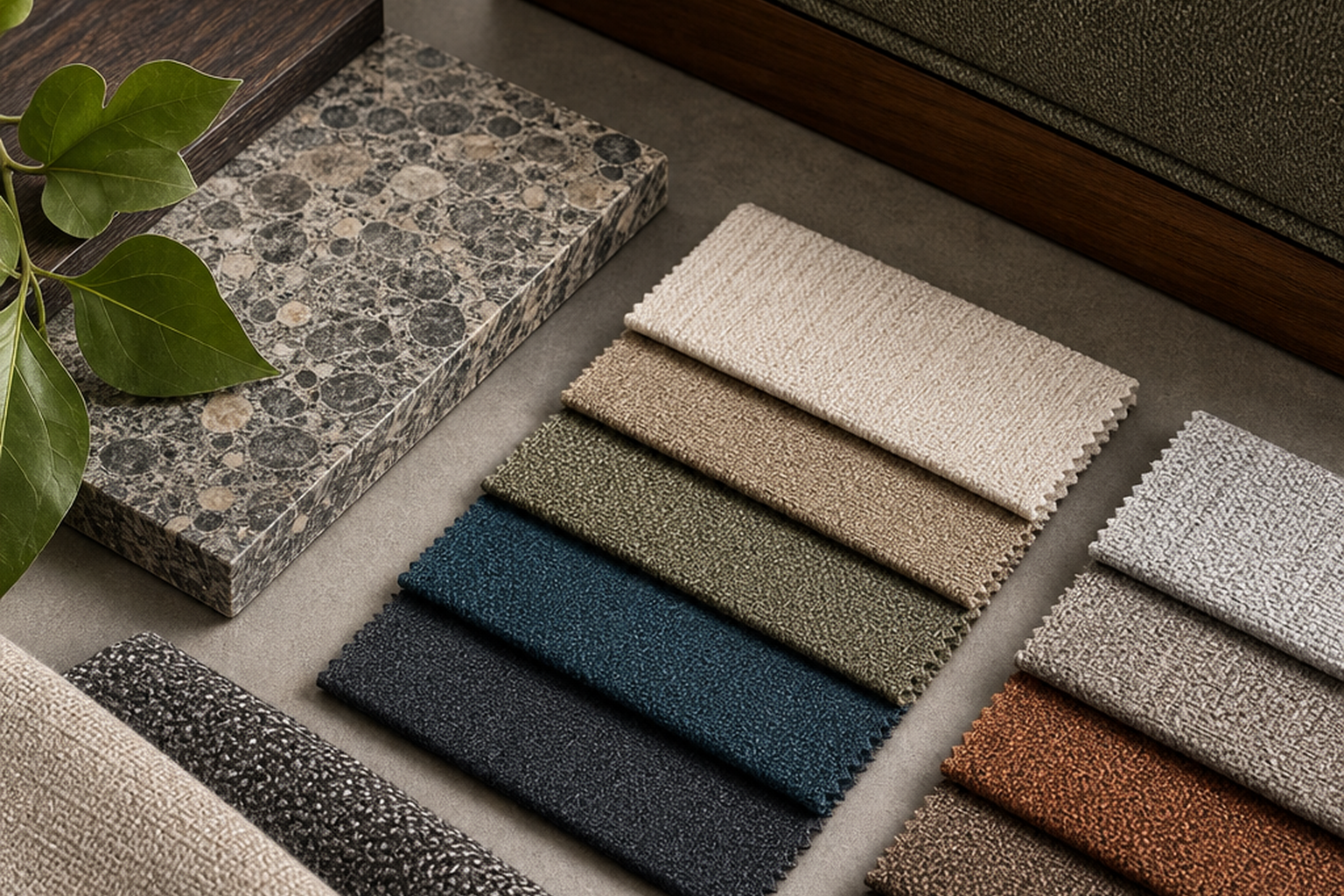
Commercial fabric specification
Commercial upholstery fabric specification checklist
Specify commercial upholstery fabric by the job requirements first: code documentation, abrasion, cleanability, comfort, color, construction, and maintenance plan.
Flammability and codes
Ask for the project’s required fire standard before choosing fabric.
Commercial seating may need CAL TB 117, NFPA 260, UFAC, IMO, aviation, or local code documentation depending on the venue. Requirements are set by the job, not by a generic fabric category.
Catalog guidanceShow flammability/code documentation where available and route uncertain buyers to sample + SKU verification before yardage.
Abrasion / double rubs
Match abrasion expectations to traffic level and replacement plan.
Booths, lobbies, waiting rooms, offices, and hospitality seating wear differently. Abrasion ratings help screen options, but seams, cushion shape, cleaning, and abuse still affect life span.
Catalog guidanceSurface abrasion/double-rub data when known; otherwise label the product as “spec check required” instead of implying commercial grade.
Cleanability and disinfecting
Confirm the exact cleaning code and approved cleaners for the SKU.
Food, spills, sunscreen, body oils, healthcare cleaners, and routine maintenance can damage the wrong surface. Easy-clean, bleach-cleanable, vinyl, Crypton, or performance claims must be product-specific.
Catalog guidanceLet buyers filter by vinyl, performance, Crypton/easy-clean, outdoor, or wipeable cues only when product details support them.
Construction and backing
Check backing, stretch, railroading, seam behavior, and upholstery method.
Commercial runs often need consistent pattern placement, durable seams, stable backing, and repeat yardage. A fabric that looks right as a swatch can fail the workroom test.
Catalog guidanceInclude width, repeat, railroad notes, backing, and sample-first prompts near the product card or PDP where available.
Comfort and hand
Balance durability with how long people sit on the surface.
Restaurant booths, hotel lounges, and office chairs need to feel good, not only clean easily. Very slick or stiff surfaces may be wrong for long seating even when durable.
Catalog guidanceUse samples and “best for” copy to separate wipeable contract choices from softer woven hospitality/residential-look choices.
Color, texture, and soil hiding
Choose texture and color for the mess the space actually sees.
Flat light solids show dye transfer, crumbs, denim, scuffs, and repairs faster. Mid-tones, heathers, textures, small patterns, and vinyl grains can be more forgiving in public spaces.
Catalog guidanceCatalog rails should favor practical mid-tones, textures, vinyl grains, and sample comparisons for high-use commercial pages.
Commercial suitability, fire performance, healthcare compatibility, outdoor/marine use, bleach cleanability, and abrasion ratings must be confirmed on the exact SKU and against the project’s own requirements before final yardage.